The British Industrial Competitiveness Scheme, or BICS, is a government scheme that cuts electricity costs for eligible manufacturers in Great Britain. The first application window is open now and closes at 11:59pm on 30th November 2026. This guide explains BICS eligibility in plain English, what you need to apply, and what to do before the deadline. Everything here is taken from the official GOV.UK guidance for applicants.
What BICS actually does
BICS doesn't send you a cheque. Instead, eligible sites are exempted from some of the policy costs that suppliers pass through on electricity bills. These are the indirect costs of three schemes:
- the Renewables Obligation (RO)
- Feed-in Tariffs (FiT)
- the Capacity Market (CM)
For many high energy users, these costs make up a noticeable slice of every unit of electricity. The scheme covers England, Scotland and Wales, but not Northern Ireland.
Key dates
- 1st October 2026: the application window opened.
- 30th November 2026 at 11:59pm: the application window closes.
- Early 2027: businesses are told whether they're eligible.
- April 2027: the exemption from RO and FiT costs starts.
- October 2027: the exemption from Capacity Market costs starts as well.
The government says these dates apply to the first year of the scheme only.
BICS eligibility: the four tests
To be eligible, your business must meet all four of these criteria.
1. You're registered on Companies House. If you aren't, you can't apply. Businesses registered in the last six months may face extra checks. 2. You operate in an eligible sector. Eligible sectors are defined by SIC codes, and the right code must be registered at Companies House. If you've changed your SIC code in the last six months, expect extra scrutiny. Don't change a code just to qualify: Companies House can challenge or remove codes that don't match what you actually do. 3. You manufacture eligible products in Great Britain. Eligible products are defined by HS commodity codes. You can look these up with the Trade Tariff tool and check them against the official list of eligible sectors and products. 4. Each site uses at least 33 megawatt-hours (MWh) of grid electricity a year. Your annual bills or half-hourly data will show whether a site clears it.
The online application won't let you go further unless you meet all four.
Check before you start
The government has a free BICS eligibility checker. It only takes a few minutes and gives an early indication. It doesn't save your answers, and the final decision is only made once your full application has been assessed.
How much relief could you get?
Relief is worked out site by site. If a site makes only eligible products, it will normally get a 100% exemption from the costs covered. If it makes a mix of eligible and ineligible products, the relief is scaled down to match the share of electricity used for eligible manufacturing.
Electricity used for supporting activities can count too, as long as it supports eligible manufacturing on that site. The guidance lists examples such as compressed air, chillers and process cooling, heating and ventilation, lighting, IT and control systems, forklifts and other handling equipment, quality testing, repairs, and offices on the site.
Does on-site solar count?
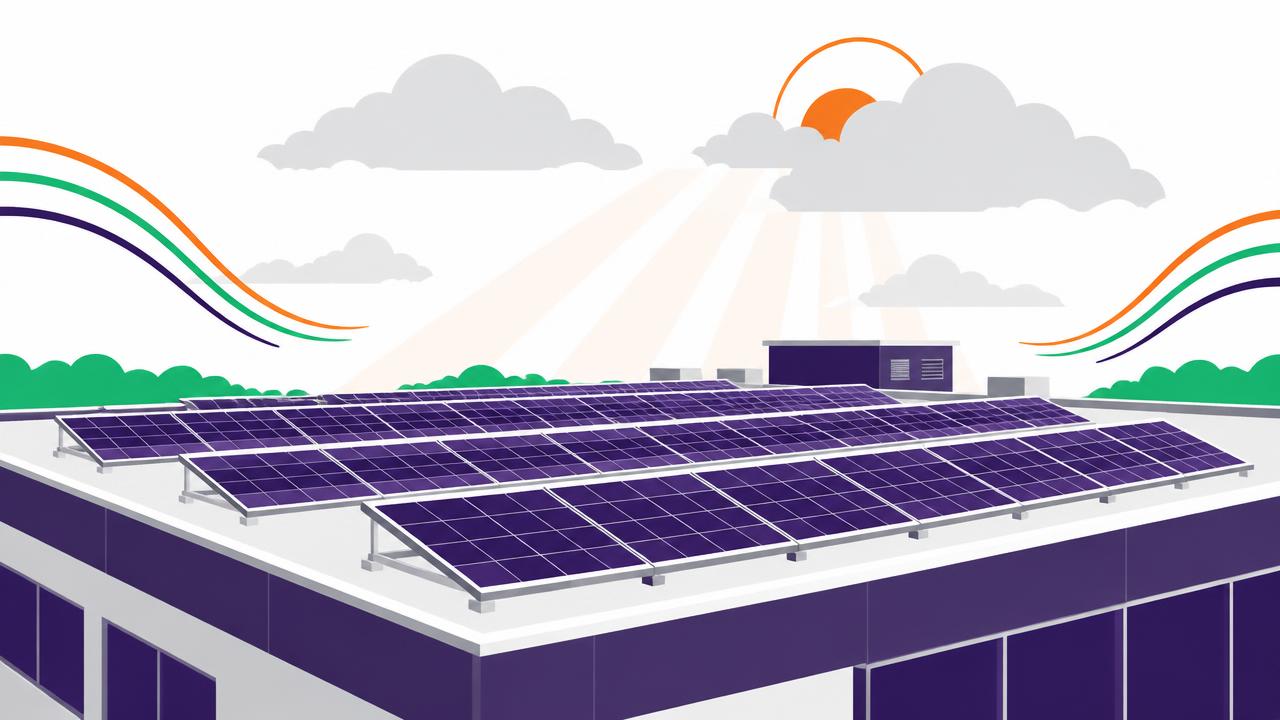
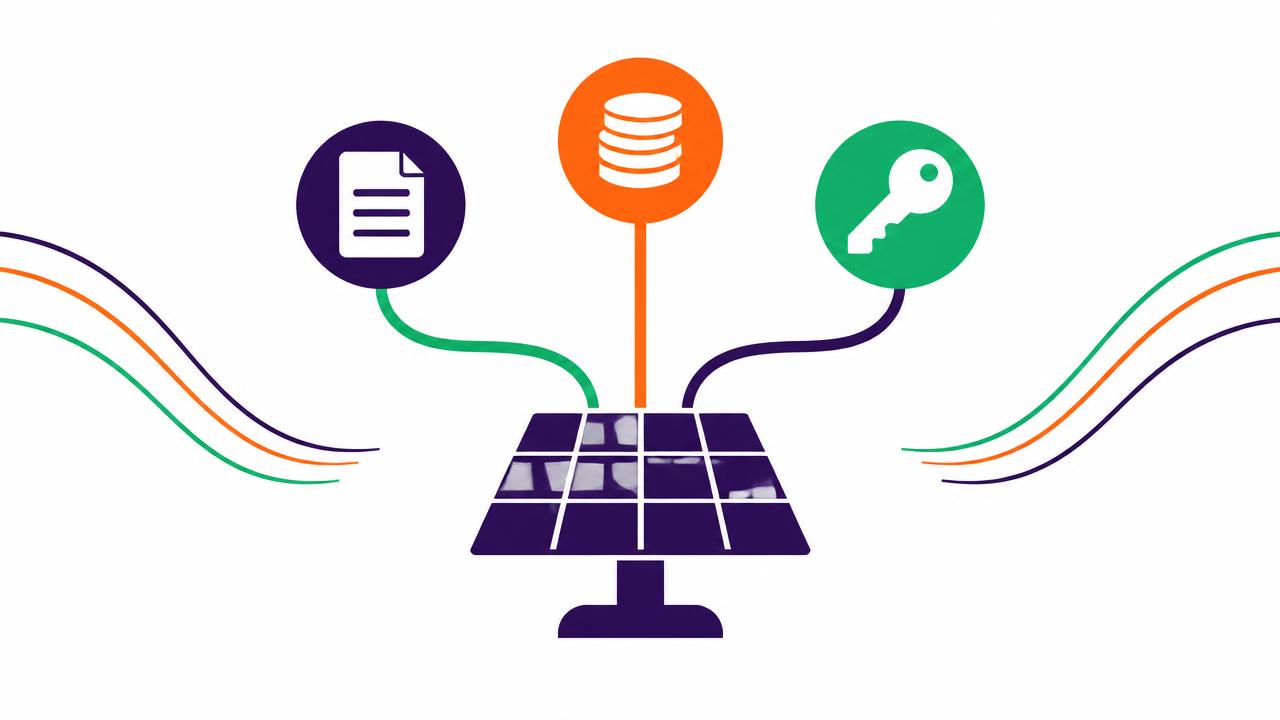
No. BICS only covers electricity you take from the grid, because that's where the policy costs are charged. Power from behind-the-meter solar, CHP or on-site wind has to be left out of your figures. The guidance gives the example of a site using 1,000 MWh, of which 300 MWh comes from its own solar panels: only the 700 MWh from the grid is in scope.
What counts as one site?
Buildings next to each other and under your control count as one manufacturing site, even if a road, railway or canal separates them. A factory in Sheffield and another in Leeds would be two sites, each assessed on its own. Warehouses, distribution centres and offices on their own don't count unless manufacturing happens there.
Does BICS cover sites on a landlord's supply?
It can. If your electricity comes through a landlord or another third party, you'll need equivalent evidence of how much you use and how the supply works. There's separate guidance for landlords and third parties (Annex C). If you're on a private wire network, you'll also need confirmation from your supplier that it's in scope.
What about the British Industry Supercharger?
If you already receive Supercharger relief, you can still apply for BICS, but you can't get relief twice for the same activity, because the two schemes cover some of the same costs.
Your application checklist
Before you start, gather:
- your Companies House number and 6-digit company authentication code (not the 11-digit personal code)
- a passport or driving licence for GOV.UK One Login, if you don't already have a business account
- an officer listed on Companies House to apply, or an email address for one who can authorise you
- the address and MPAN (meter number) for each manufacturing site
- electricity bills covering the latest six months in a row within the last 12 months, for each site
- details of the products you make at each site, with supporting evidence
- a short description of each site (up to 2,000 characters), with site plans or process diagrams if they help
You can't change an application once it's submitted, so check everything first. The government will check claims, and false or incomplete information can lead to relief being taken back.
What we'd do now
1. Run the eligibility checker this week. 2. Pull together six months of bills and your MPANs for each site. 3. Check your SIC code on Companies House and your product codes on the Trade Tariff. 4. Work out roughly how much of each site's grid electricity goes on eligible products. 5. Apply well before 30th November, rather than in the last week.
When you're ready, you can start your BICS application on GOV.UK.
If you'd like a second pair of eyes on your bills, meter numbers or site description before you apply, get in touch. We'll go through it with you, with no hard sell.
- BICS
- Energy costs
- Manufacturing
- Grants and relief
- Government schemes
Want to know what this means for your business?
Book a free energy review